


Configuration & customisation
Every Workhorse system is configured to the business that runs it — your words, your documents, your way of working.
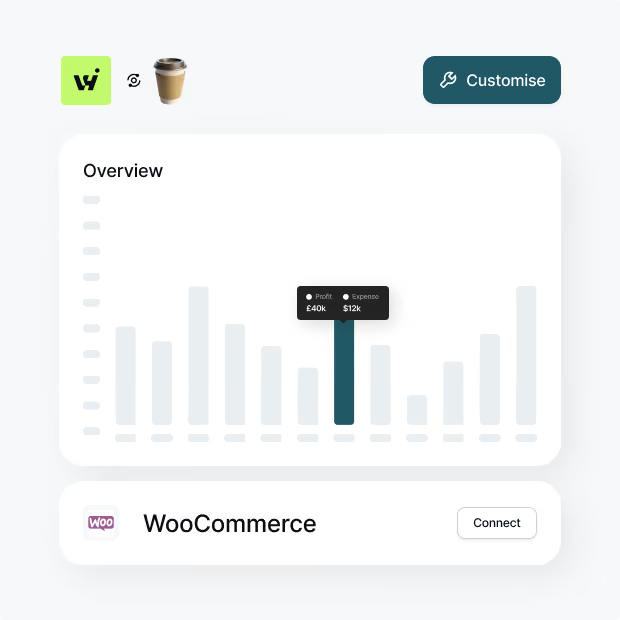
Most inventory software expects the business to adapt to it.
Workhorse is set up the other way round: during implementation, the system is configured to fit how your business already works — so by the time it goes live, it already works the way you do.

The aim is to remove friction: your people see their own vocabulary, their own documents, and nothing they don't use.
Core — the complete platform
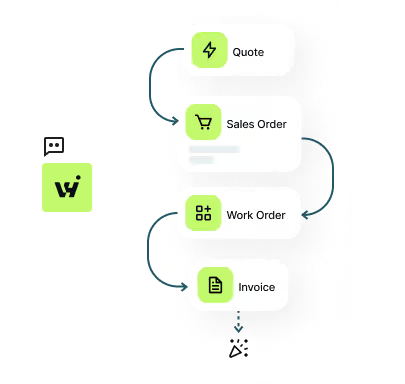
Core is the whole Workhorse platform — every module on the product page, in every system: quotes, sales orders, stock, purchasing, production, despatch, invoicing, reporting and the Xero integration. It isn't a stripped-down base with features sold back to you later — all of it is in place before any tailoring starts.
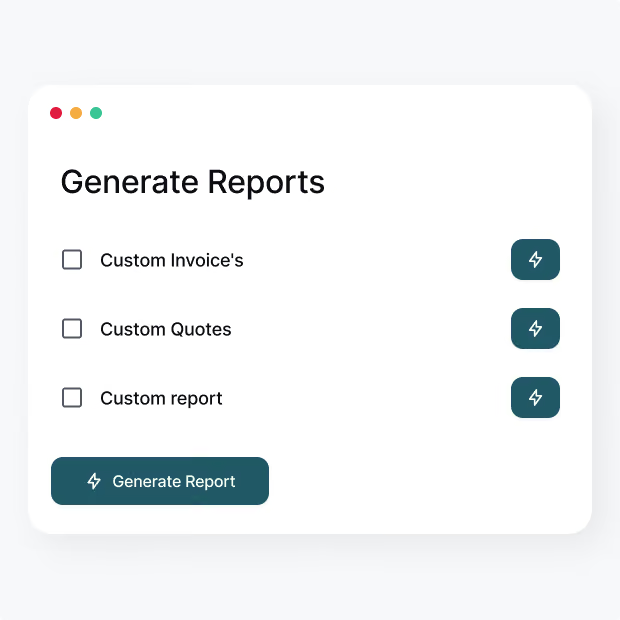
Configuration included in every implementation
Configuration is what fits the platform to your business. It means adjusting the platform, not altering its code — which is why it's included in every implementation, quick to do, and safe to change later. In practice it covers:

Hiding what you don't use.
Modules, fields and options your business doesn't need are removed from view, so screens only show what's used.

Your vocabulary.
Fields and statuses are relabelled to the words your business already uses — if the trade calls it a kill sheet, so does the system.

Fields and forms for what you record.
Extra fields, defaults and validation, so the information your business runs on is captured where the work happens.

Your documents.
Order confirmations, despatch notes, invoices and labels produced as PDFs in your format — the documents your customers and suppliers already expect, filled in by the system.

Your reports.
Reports shaped to how you already read the business — by product, customer, category, batch or margin.
.svg)
Your stages and prices.
Quote stages, production stages, price lists and customer terms set up to match how you sell and how you make.

Customisation — where configuration isn't enough
Occasionally a business has a process configuration can't reach — a document format no one else uses, or a calculation specific to the business. For that, Workhorse can be customised: development scoped in writing against that specific process, priced by the technical effort involved, and taken on where it's warranted. One example — a wholesaler receives a nightly stock file from a third-party cold store, so an upload was built that updates batch stock from the file automatically. Sometimes the scoping conversation shows that configuration already covers the need, in which case that's what we'll recommend.
A managed implementation
Standard inventory apps are self-service: sign up, import your data, learn as you go. Workhorse is implemented — every system is set up by our team, and the work follows the same path.
Slide Right
.svg)

It starts with discovery
After the discovery call, you receive a functional requirements document: how you work now, what the system will do about it, and what it will cost. Both sides see the whole job before committing to any of it.
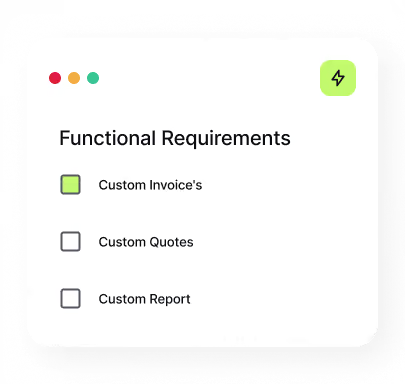

Workshops with the people who do the work
A project manager works through each area of the business with the people who run it — orders, stock, purchasing, production, despatch, invoicing.

.svg)
Configuration and data.
The system is configured area by area, and your products, customers, suppliers and prices are loaded from templates we provide.
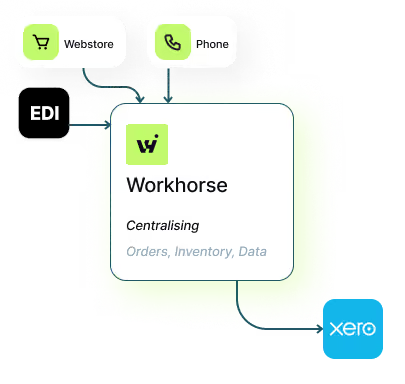

Go-live preparation
Test data is cleared, opening stock is loaded, integrations are confirmed, and our team supports the cutover and the weeks that follow.
Implementations run a few weeks to a few months, depending on complexity. The implementation is fixed price for the scope agreed in the functional requirements document.
Dedicated team support
The team that configured your system stays with it through go-live and on to the handover to our helpdesk — and the contact doesn't stop there.
We expect a Workhorse system to keep changing as the business does: a new product line, a new customer with new paperwork, a process that no longer matches how it was first set up.
A system that keeps fitting as you change
Small adjustments — a new field, a report change, hiding something no longer used — are included in the ongoing service; larger changes are scoped and quoted the same way the original implementation was. We expect and want that continued contact — it's how the system stays fitted to the business as it changes.

What Our Users Say
.svg)
.svg)
What this looks like in practice
Fitting by removing
A precast concrete manufacturer runs Workhorse with the purchasing module hidden entirely — raw materials arrive on standing supplier arrangements, so purchase orders would only be clutter. Their assemblies deliberately carry no bill of materials: costs are entered per job, because that's how they price. None of it needed development — it's all configuration.
Building where warranted
A meat wholesaler receives a kill report from the abattoir after each week's processing. Configuration handles most of their system — batch tracking, cutting plans, invoicing on despatch — but turning an emailed report into purchase orders is beyond configuration, so that was built: the report uploads, and the system raises a purchase order per farmer, priced per animal — one targeted piece of development inside an otherwise standard system.
Where Workhorse fits
Workhorse is for established product businesses — past the point where spreadsheets and entry-level stock tracking can keep up. Your processes don't need to be unusual: whether the operation is complex or perfectly ordinary, configuration, implementation and support work the same way — the system is set up around how you run.
If you hold a handful of products in one place and orders ship complete, Xero alone may genuinely be enough — and we'll say so at the discovery call.
Bring us the process your current system can't handle.
The discovery call is where it starts; the functional requirements document that follows sets out what we'd configure, what — if anything — we'd build, and what it would cost.